What Is a Corporate Kit?
The direct answer
A corporate kit—also called an LLC kit, corporate record book or minute book—is an organized home for your entity's ownership and governance records. A complete kit combines a personalized gold-embossed binder and slipcase, a custom brass-die embossing seal, 20 numbered stock or membership certificates, a transfer ledger and entity-specific bylaws or operating agreement documents.
Attorneys, CPAs, banks and founders use these records to document approvals, ownership and corporate formalities. Keeping accurate records can support separation between business and personal affairs, but a kit alone does not form an entity or protect the corporate veil. Legal requirements depend on your state and entity.
Custom Corporate Kit — $89.97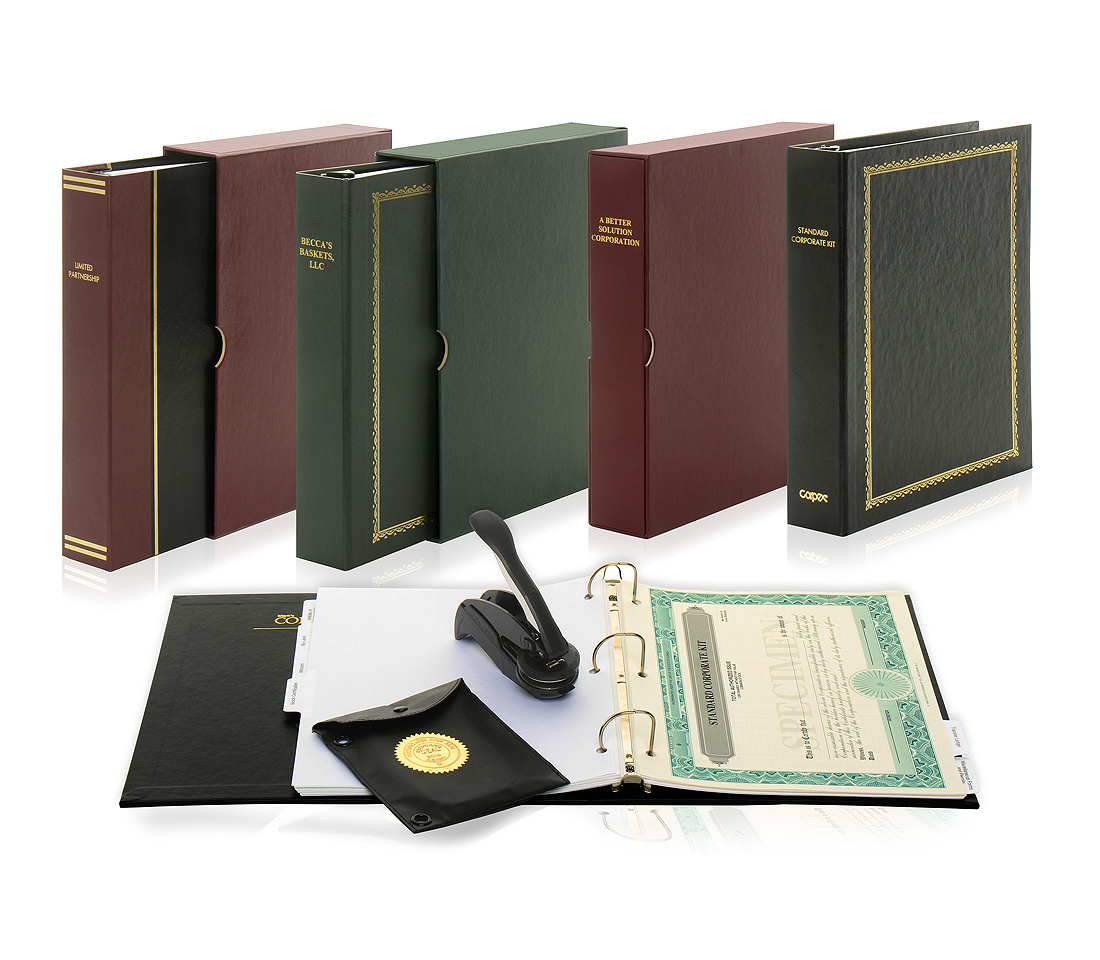
Compare kits and estate record binders
| Product | Price | Binder & slipcase | Embossing seal | Certificates | Ledger | Entity-specific records |
|---|---|---|---|---|---|---|
| Custom Corporate Kit | $89.97 | Included | Custom brass-die seal | 20 numbered stock certificates | Transfer ledger | Minutes & bylaws |
| LLC Kit | $89.97 | Included | Custom brass-die seal | 20 numbered membership certificates | Transfer ledger | Operating agreement & LLC record tabs |
| Non-Profit Kit | $89.97 | Included | Custom nonprofit seal | 20 membership certificates or none | Membership records | Nonprofit bylaws & minutes |
| Limited Partnership Kit | $89.97 | Included | Custom partnership seal | 20 partnership certificates | Transfer ledger | Partnership record sections |
| Estate Planner Binder | $41.97 | Included | Not included | Not included | Not included | Wills, trusts & estate planning tabs |
When you need a corporate kit or seal
Bank account opening
Keep formation documents, resolutions and authorized signer records together. A bank may request particular documents or a seal; confirm its requirements.
IRS and state audit documentation
Organize minutes, agreements, ownership records and approvals. Your accountant or attorney can advise which records must be retained.
Stock or membership issuance
Record authorized interests, certificate numbers and transfers in your entity records. Certificates should match valid approvals and ownership records.
Real estate and loan closings
Title companies and lenders may ask for resolutions or seal impressions. Their requirements are transaction-specific.
Apostille and foreign notarization
An overseas recipient may request an embossed seal. The embosser does not itself notarize a document or provide an apostille.
Frequently asked questions
What is a corporate kit?
A corporate kit is a record book and document set for an existing entity. It typically includes a personalized binder and slipcase, custom embossing seal, ownership certificates, transfer ledger and entity-specific governance documents.
Is a corporate kit legally required?
The kit as a packaged product is not generally required. Entities do have recordkeeping duties that vary by state and entity type. A kit helps organize those records but does not guarantee corporate veil protection.
What is the difference between a corporate kit and an LLC kit?
A corporate kit uses stock certificates and minutes & bylaws; an LLC kit uses membership certificates and an operating agreement. Choose the records and wording matching your entity.
Does my state require a corporate or LLC seal?
No U.S. state or DC requires a corporation or LLC to have a seal. A bank, title company or overseas recipient may request one. Our state seal guide lists statute citations.
Does a kit purchase include state formation filing?
No. Standalone kits are records products, not state filings. Formation + Kit Bundles are offered separately. A kit purchase does not form your business or obtain an EIN.
When does a customized kit ship?
Orders placed before 2:00 PM ET Monday–Friday ship the same day by FedEx from New Smyrna Beach, Florida. Later or weekend orders ship the next business day; delivery timing depends on the service selected at checkout.
Corp USA is not a law firm and does not provide legal or tax advice. Consult a licensed attorney about requirements for your entity.